Ice Dams in Lincoln and Omaha: Why Your Gutters Get Blamed, and What Actually Fixes It
February 10, 2026 · Paragon Exteriors
Every January we get calls from homeowners in Lincoln and Omaha who want new gutters because of the ice. The eaves are lined with icicles, there is a ridge of ice along the roof edge, and sometimes water is showing up on the ceiling inside. The gutters look like the problem. They almost never are.
What an ice dam is
Snow sits on the roof. Heat from the house leaks up through the ceiling and warms the roof deck from below. The snow on the warm part of the roof melts and runs down toward the edge. The edge of the roof, out past the exterior wall, is cold, so the water refreezes there. Do that for a few days and you have a dam of ice along the eave. Meltwater backs up behind it, works under the shingles, and comes through the ceiling.
The gutter happens to be where the ice is sitting. It did not cause the melting.
Why it happens on some houses and not others
Look down any street in Lincoln after a snow. Some roofs are still white a week later. Some are bare in the middle with icicles at the edge. The bare ones are losing heat into the attic. The white ones are not. That heat loss comes from thin attic insulation, air leaks around light fixtures and attic hatches, bathroom fans venting into the attic instead of outside, and attics with no real airflow so warm air just sits under the deck.
What ice dams do to a roof
Water under shingles is the whole problem. It rots the decking at the eave, soaks the fascia the gutters are hanging on, and stains the ceiling inside. Over a few winters it can take out the bottom two or three feet of a roof. When we replace a roof in Nebraska, we run ice-and-water shield along every eave and valley for exactly this reason. It is a sticky membrane under the shingles that keeps backed-up water from getting to the deck. It does not stop the dam, but it stops the leak.
What actually fixes it
- Attic insulation. Getting the attic floor up to a proper depth keeps the heat in the house instead of on the roof deck. This is usually the single biggest fix.
- Air sealing. Closing the gaps around can lights, plumbing stacks, the attic hatch and top plates. Warm air through those gaps does more damage than you would think.
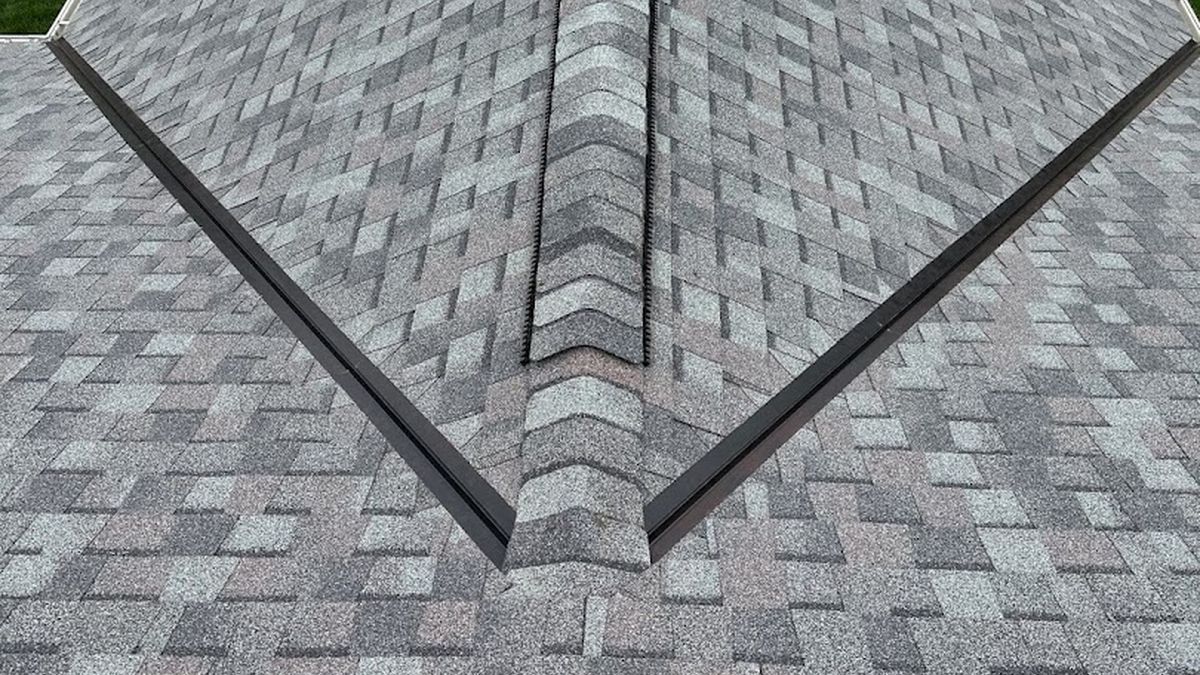
- Ventilation. Soffit intake vents and a ridge vent so cold outside air moves through the attic and keeps the deck cold. When we replace a roof we look at the ventilation every time, because a new roof on an attic that cannot breathe will have the same ice next winter.
- Bath fans vented outside. Not into the attic. This one is common in older homes.
What gutters can and cannot do
Clean, correctly pitched gutters help a little, because they move meltwater away on the days it does drain. Clogged gutters make things worse, because the ice has something to build on. But new gutters on a roof that is melting snow from below will fill with ice the same as the old ones. If a company tells you gutters or gutter guards will stop ice dams, they are selling gutters.
Heat cables along the eave are a patch. They melt channels through the dam so water can escape. They do not fix the cause, and they cost money to run all winter.
If you have water coming in right now
Do not chip at the ice with a hammer. You will take shingles with it. A roof rake to pull the snow off the bottom few feet of the roof from the ground is the safe move, and it helps. Then call us. We will look at the roof edge, the attic and the ventilation, and tell you which of the fixes above your house actually needs. Most of the time it is insulation and air sealing, not a new roof, and we will say so.
Roof or gutter questions in Omaha or Lincoln? Get in touch and we will take a look.